Published by Texas Dating After 50
When your favorite photo no longer reflects your current appearance

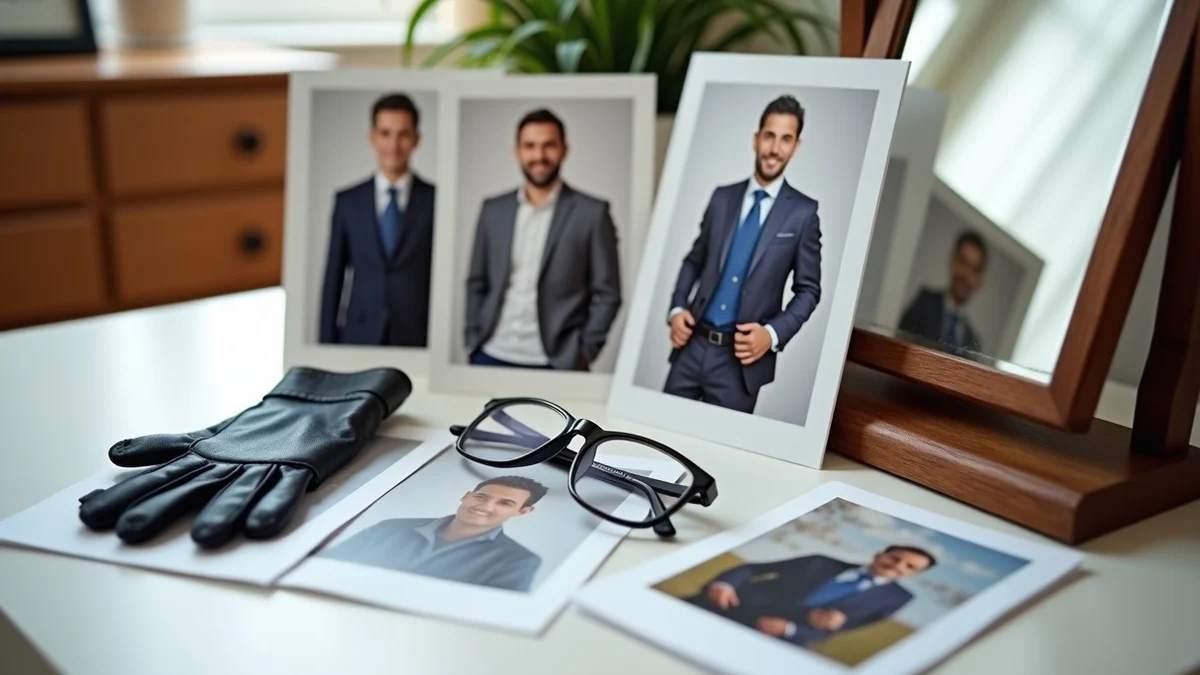
A profile built around a favorite vacation photo from years ago creates a mismatch when hair, facial hair, glasses, clothing, or mobility has changed. If you now wear glasses or use a mobility aid, show them in the photo set. The goal is recognizability at the first meeting, not preservation of an earlier look.
Current photos should represent the way you usually appear when meeting someone: your present hairstyle, facial hair, eyewear, clothing, and general mobility. Older images still have a place when they add context, but the lead image and most of the set need to establish today’s appearance clearly.
Lead-photo criteria for immediate recognition
- Criterion: Visible facial features Check: The face is large enough to see clearly, with eyes and facial shape unobstructed.
- Criterion: Natural expression Check: The expression looks like a genuine moment and does not rely on an extreme pose or forced look.
- Criterion: Individual framing Check: No other person stands close enough to create uncertainty about whose profile it is.
- Criterion: Representative appearance Check: Hair, facial hair, glasses, clothing, and other visible features match how you usually look now.
- Criterion: Sufficient image quality Check: The image is sharp, well lit, and large enough to remain clear after the dating app displays it.
A varied set shows both appearance and lived context
The lead photo handles recognition. A full-length photo then shows clothing, posture, and the way you present yourself from head to toe. An activity photo adds a meaningful part of daily life, such as cooking, gardening, walking, making music, or taking part in another regular interest. The activity should remain visible without making your face too small to identify.
Photo order works best when each image answers a different visual question. The first image establishes your face, the next broadens the view of your appearance, and a later image adds an interest or setting. Further photos can show a different expression, distance, or season. Repeated headshots, repeated outfits, and several nearly identical poses consume space without adding context.
What makes an ordinary snapshot usable on a dating profile?
- Step: 1 Action: Use soft light that reaches the face, such as light from a window or an open-shade setting. A bright window directly behind the subject leaves the face dark.
- Step: 2 Action: Place the camera near eye level and frame the subject with enough space around the head and shoulders. This keeps the face proportionate and avoids a distorted low or high angle.
- Step: 3 Action: Separate the subject from a busy background through distance, a simpler wall, or a clear outdoor setting. Background separation directs attention to the person.
- Step: 4 Action: Ask a friend to take several images from a normal conversational distance, including one upper-body view and one full-length view. A phone held steady produces more usable detail than a hurried selfie.
- Step: 5 Action: Crop out distractions while keeping the face, body, and key activity intact. Select the original sharp file when available; heavy enlargement and repeated saving reduce visible detail.
Social proof can become visual confusion
| Photo Choice | Context Value | Identity Cost | Profile Use |
|---|---|---|---|
| One group photo | Shows that friends, relatives, or a community setting are part of the person’s life. | Several similar faces make the profile owner unclear, especially on a small screen. | Place it after clear individual photos, and include it only when the profile owner is easy to identify. |
| Sunglasses or a hat | Shows clothing or a setting where the accessory is genuinely worn. | Covered eyes, hair, or facial features reduce recognition. | Use as a later supporting image, not as the lead photo. |
| Distant activity framing | Shows a location, hobby, or movement-based activity. | A small face gives little information about appearance. | Pair it with a closer activity or individual image. |
| Several group shots | Repeats the social setting. | The same identity problem appears multiple times and reduces visual variety. | Keep one distinct context image and give the remaining places to individual, full-length, or activity photos. |
A confusing photo set often contains mismatched ages, contexts, or identities
A final self-audit catches images that look acceptable alone but create uncertainty together. Check for inconsistent recency, a lead photo that no longer resembles your current appearance, and heavy filters that alter facial features. Remove duplicate poses and photos where sunglasses, hats, distance, or poor resolution hide the face.
Review pets and children for clear context so a viewer understands whether they are part of your life. Inspect cropped former-partner photos for a leftover shoulder, hand, or body at the edge. The completed set should show one identifiable person across several settings, with current appearance and everyday context visible throughout.
A clear photo set after 50 does not require a studio session. It requires current appearance, a recognizable lead image, a full-length view, one meaningful activity, and enough visual variety to prevent confusion. Review every image as part of the set, then remove anything that obscures who you are now.