
Published by Texas Dating After 50
Hinge and Bumble encourage different kinds of profile interaction
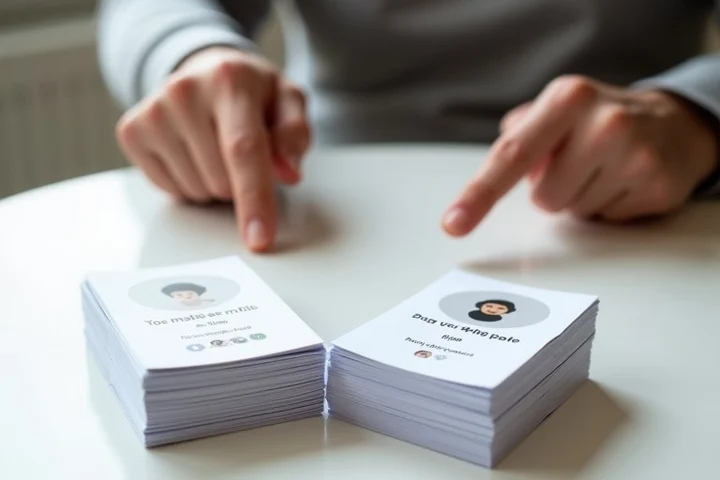
Hinge places prompts alongside photos and profile fields, then ties a like to one profile element: a prompt answer or photo. A comment can accompany that like, so the recipient sees the subject that drew interest. Bumble also uses photos, a bio, prompts, and other profile fields, but its ordinary like is best treated as interest in the profile as a whole unless the current interface shows a content-linked option. A Bumble match can still start from something written in a prompt or bio; the pre-match route needs a current check. The trade-off is concrete: Hinge makes the prompt or photo part of the initial interaction, while Bumble gives profile content a larger role after the match. For someone over 50 who wants substance before a generic greeting, Hinge has the more direct profile-led mechanism; someone comfortable opening from a broader profile signal may prefer Bumble’s simpler like flow.
When you want a conversation to begin from profile content
On Hinge, a like with a comment gives a potential match a ready-made subject, although the comment itself is not a conversation until the other person matches and replies. On Bumble, a like creates interest that becomes chat only after a match; the opening exchange follows the rule displayed for that match, which may involve an Opening Move or another current prompt. That distinction matters for anyone who dislikes sending or receiving a generic greeting. A user who wants every first contact tied to profile content should favor Hinge’s comment mechanism. A Bumble user should inspect whether the current opening path lets the other person answer a profile prompt, respond to a posted opener, or send the first message under that match type. Neither app turns a like into a guaranteed reply.
Discovery pace, filters, and control
Discovery control has two parts: which profiles enter the feed and what you can do with them. Both apps use a browse feed and location-related settings; the exact filter names, daily like limits, backtracking access, and incoming-like visibility belong to current account terms. Free use therefore gives a cleaner comparison of the underlying pool, while paid features can change how quickly a person reviews or acts on that pool. The trade-off is control against cost: more filters or review tools matter only if the official terms show they address the restriction you actually encounter. Do not infer a paid feature from an old article or another user’s screen; check Hinge and Bumble’s current help and subscription pages.
A younger reputation does not reveal your local over-50 pool
An app’s reputation among younger daters does not establish the over-50 pool returned at one Texas location. Who has accounts in that area, which age and distance settings they selected, and how much profile information people supplied shape the result; Hinge and Bumble draw from different member bases. To make a fair comparison, hold the variables constant: use one Texas location, the same age range—for example, 50–65—the same distance radius, and the same seven-day observation window. Browse each app on the same number of days and record how many profiles meet your stated interests, contain enough information to assess, and lead to a match or reply. Leave paid upgrades out of the first pass if the goal is to compare the free pool. Seeing fewer profiles on one service does not prove that app is poor across Texas; it reports what that account received under those settings. This test matters especially for people outside a major metro, where a chosen radius can substantially change the result.
Test current mechanics before paying
- Set the same Texas location, age range, distance radius, and seven-day observation window in both free accounts.
- Check each app’s current official help and subscription documentation for likes, comments, matching, messaging, opening rules, filters, and paid-feature limits.
- Review the same number of profiles on each service without changing the radius or age range.
- Log likes sent, profile-linked comments or openers, matches, and replies during the shared trial window.
- Compare the notes with the feature you actually want to buy in mind.
Before you move on
Does a larger number of profiles mean an app is better for singles over 50?
Not by itself. A larger feed may contain fewer complete profiles or require more screening. Record how many profiles meet your own age, distance, conversation, and relationship criteria, not only the total number displayed.
Does a match on Hinge or Bumble prove compatibility?
No. A match records mutual interest under that app’s rules. The quality of the profile information, the opening exchange, and the replies provide separate information about whether continuing the conversation makes sense.
Why should replies be compared with the number of likes sent?
Raw reply totals ignore exposure. One account may send more likes, receive different opening options, or encounter different limits. Recording likes, matches, and replies together shows how each app performed under the same test conditions.
Hinge is the better first test for profile-led conversation because its like-and-comment structure points to a prompt or photo. Bumble remains an alternative for its profile-and-match flow, but its opening rules and paid controls require current verification. For a Texas single over 50, the decisive evidence is the same settings and trial on both apps—not brand reputation.